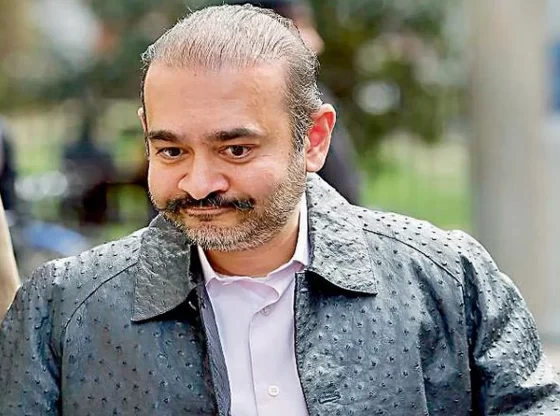

 In a significant ruling, London’s High Court of Justice has rejected fugitive Indian diamond merchant Nirav Modi’s plea to reopen his extradition case, effectively exhausting his legal options in the United Kingdom and setting the stage for his potential return to India after over seven years in British custody. The decision, delivered on Wednesday by Justices Jeremy Stuart-Smith and Robert Jay, centered on assurances provided by the Indian government in September and December 2025, as well as a February 2026 note from the Indian High Commission in London. These pledges guaranteed that Modi would not be interrogated by any of the five investigating agencies involved in his cases, addressing concerns about potential human rights violations, including the risk of torture. Modi had invoked the precedent of defense consultant Sanjay Bhandari, whose extradition was halted by a UK court in 2025 due to similar fears of mistreatment in India. The judges noted that without these “specific and binding” assurances—deemed to be given in good faith by competent Indian authorities—the court might have reconsidered the appeal. However, they emphasized the high-profile nature of Modi’s case, the strong bilateral ties between the UK and India, and additional safeguards like daily access to lawyers and medical care, which tipped the balance in favor of extradition despite India’s non-signatory status to the UN Convention Against Torture.
Modi, accused of orchestrating a massive fraud exceeding ₹13,500 crore at Punjab National Bank alongside his uncle Mehul Choksi, has been imprisoned in the UK since his 2019 arrest by Scotland Yard following India’s extradition request. A Westminster Magistrates’ Court initially approved his extradition in 2021, a decision upheld on appeal in 2022, with the UK Supreme Court later denying further review. The Central Bureau of Investigation (CBI) hailed the outcome as a victory, crediting coordinated efforts to counter the Bhandari precedent. Separately, Modi appeared in a London court the same day for a hearing on a Bank of India claim related to a personal guarantee for a multimillion-dollar loan. Indian authorities have designated Mumbai’s Arthur Road prison for his detention upon return, though the court did not address video-conferencing facilities for remote trials. Declared a fugitive economic offender in India, Modi has seen assets worth over ₹2,500 crore attached and nearly ₹1,000 crore restored to affected banks. The ruling underscores ongoing tensions in international extradition cases involving human rights, while highlighting India’s persistent pursuit of economic offenders abroad. (312 words)